
Why Every Conversation Turns Into a Fight: Breaking the Criticism-Defensiveness Loop
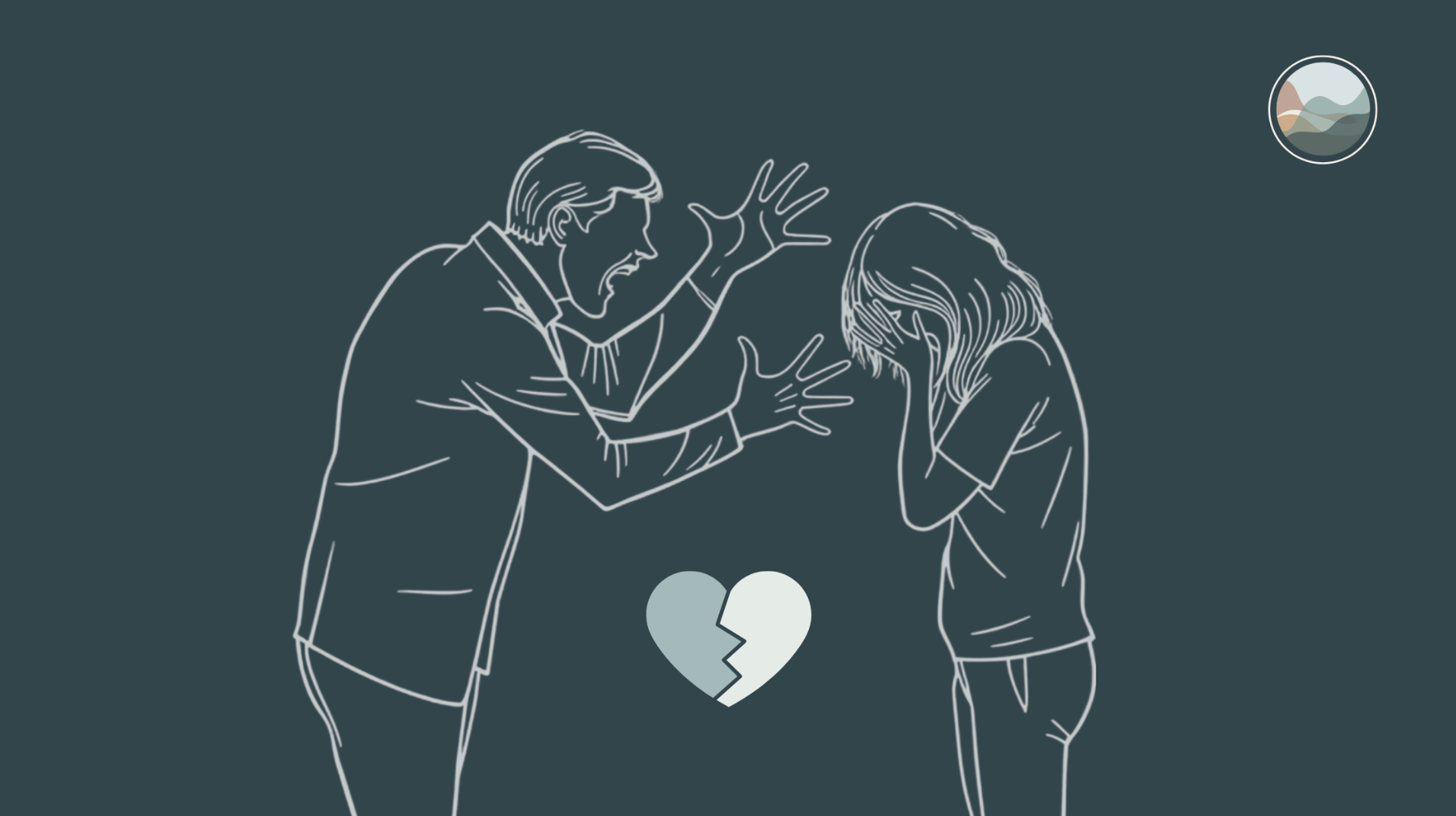
There are couples who can start a conversation about something small and somehow end up in the same fight again.
It begins with a comment.
Then there is a reaction.
Then there is a defense.
Then both people are no longer talking about what happened. They are talking about how the other person said it, what they “always” do, what they “never” understand, or why this keeps happening.
Before long, the original issue is buried under a much bigger emotional pattern.
One person feels attacked.
The other person feels dismissed.
One person pushes harder to be heard.
The other person pulls away, explains, shuts down, or pushes back.
Both people may leave the conversation feeling misunderstood, hurt, exhausted, and more alone than they felt before it started.
This is often the criticism-defensiveness loop.
And once a couple gets stuck in it, almost any topic can become the doorway into the same fight.
The fight is not always about the thing you are fighting about
At the surface, the argument may be about dishes, tone, texting, money, parenting, sex, plans, chores, or who forgot to do something.
But underneath, the fight is often about something more vulnerable.
Am I important to you?
Do you respect me?
Can I trust you to show up?
Do you care how this affects me?
Are you listening?
Do I have to fight to matter here?
When a person feels hurt, overwhelmed, unseen, or alone, they may not always express that directly. Instead, it can come out as criticism.
“You never help.”
“You always make this about you.”
“You don’t care.”
“I should have known I couldn’t count on you.”
Those statements usually create defensiveness because they do not sound like pain. They sound like an attack.
The other person may respond with:
“That’s not true.”
“I do help.”
“You’re exaggerating.”
“I can never do anything right with you.”
“You’re the one who started this.”
Now both people are protecting themselves.
But neither person feels closer.
Criticism is often a protest
Criticism can be hurtful, and it matters to name that.
But criticism is not always coming from a desire to harm the other person. Often, it is a protest.
A person may criticize when they do not know how to say:
“I feel alone in this.”
“I need more support.”
“I’m scared you don’t notice how much I’m carrying.”
“I miss feeling close to you.”
“I don’t know how to ask for what I need without feeling needy.”
The problem is that criticism usually hides the softer feeling underneath.
Instead of saying, “I felt hurt when you did not check in,” the person says, “You never think about anyone but yourself.”
Instead of saying, “I feel overwhelmed and need help,” the person says, “You clearly don’t care how much I do around here.”
Instead of saying, “I wanted to feel chosen,” the person says, “You always make everyone else a priority.”
The feeling may be valid.
The delivery may still create damage.
That is part of why this loop is so hard. The person criticizing often feels like they are finally naming the truth. The person receiving it often feels like they are being reduced to their worst moment.
Defensiveness is often self-protection
Defensiveness can be just as damaging as criticism, but it also usually serves a purpose.
When someone gets defensive, they may be trying to protect themselves from shame, blame, failure, or feeling like the “bad one” in the relationship.
They may hear their partner’s pain as an accusation.
They may feel cornered.
They may panic internally and try to prove that they are not selfish, careless, irresponsible, or wrong.
Defensiveness can sound like:
“I didn’t mean it that way.”
“That’s not what happened.”
“You do this too.”
“I was busy.”
“You’re making this a bigger deal than it is.”
“At least I tried.”
Sometimes the person is offering real context. Context can matter.
But defensiveness becomes a problem when the goal is no longer understanding the other person. The goal becomes escaping blame.
That shift can happen quickly.
One partner says, “I felt hurt when you didn’t call.”
The other partner says, “I told you I had a busy day.”
Now the conversation has moved away from the hurt and into the defense.
The first person feels dismissed.
The second person feels accused.
The loop continues.
Why the pattern becomes repetitive
Couples often get stuck in repetitive conflict because both people are reacting to the pattern, not just the moment.
One person may already expect to be dismissed, so they come in sharper.
The other person may already expect to be criticized, so they come in guarded.
A conversation that could have been small begins with both nervous systems already bracing.
That is why the same fight can happen across different topics.
The content changes.
The cycle stays the same.
One person pursues.
One person defends.
One person escalates.
One person shuts down.
One person demands more engagement.
One person feels overwhelmed and withdraws further.
Over time, both people may start to believe the other person is the problem.
But often, the pattern is the problem.
That does not mean no one is responsible for their behavior. Both people are responsible for how they communicate, repair, and respond.
But seeing the pattern can help shift the goal.
The goal is not to win the argument.
The goal is to stop feeding the cycle that keeps leaving both people hurt.
The first step is slowing the conversation down
When a couple is caught in the criticism-defensiveness loop, the conversation often moves too fast.
The criticism lands.
The defense comes immediately.
The tone escalates.
Old examples get pulled in.
Suddenly, the conversation is no longer about the present issue. It is about every unresolved feeling connected to it.
Slowing down does not mean ignoring the issue.
It means creating enough space to respond differently.
That might sound like:
“Can we pause for a second? I want to understand what you are saying, but I’m getting defensive.”
Or:
“I’m realizing I’m coming in harsh. Let me try that again.”
Or:
“I want to respond, but I need a minute so I don’t just react.”
Or:
“I think we are getting into the same pattern. Can we slow this down?”
This kind of pause can feel unnatural at first, especially if a couple is used to pushing through conflict until someone gives up or explodes.
But the pause matters.
It interrupts the automatic response.
It gives both people a chance to notice what is happening before the cycle takes over.
Replace criticism with a clearer need
One of the most useful shifts is learning to translate criticism into a need.
This does not mean watering down what you feel. It means making the vulnerable message easier for the other person to actually hear.
Instead of:
“You never help with anything.”
Try:
“I’m feeling overwhelmed and I need more help with the house this week.”
Instead of:
“You don’t care about me.”
Try:
“I felt unimportant when I didn’t hear from you.”
Instead of:
“You always make me the bad guy.”
Try:
“I need us to talk about this without turning it into blame.”
Instead of:
“You never listen.”
Try:
“I need to feel like you understand what I’m saying before we move into problem-solving.”
A complaint can be specific.
A criticism attacks character.
There is a difference between saying, “I felt hurt when this happened,” and saying, “You are the kind of person who always hurts me.”
The first opens a door.
The second usually starts a fight.
Replace defensiveness with acknowledgment
If criticism needs to soften into a clearer need, defensiveness needs to shift into acknowledgment.
Acknowledgment does not mean you agree with every detail.
It does not mean you are accepting blame for everything.
It does not mean your perspective no longer matters.
It means you are willing to recognize that the other person had an experience, and that experience deserves care before you defend your intentions.
For example:
“I can see how that hurt you.”
“I understand why that felt dismissive.”
“That makes sense that you felt alone in that moment.”
“I hear that you needed more from me.”
“I can see why my tone landed badly.”
These sentences can be hard to say when you feel misunderstood. You may want to explain first. You may want to correct the record. You may want to prove that your intention was not harmful.
But in many conflicts, acknowledgment has to come before explanation.
If someone is telling you they are hurt, and your first move is to prove why they should not be, they will likely feel more alone.
A useful question is:
Can I acknowledge the impact before explaining my intent?
That one shift can change the entire direction of a conversation.
Repair does not require a perfect conversation
Many people think repair means the conflict has to end with complete agreement.
It does not.
Repair often means both people are able to return to each other with more honesty, softness, and responsibility.
A repair might sound like:
“I got defensive earlier. I think I felt blamed, but I can see that you were trying to tell me you were hurt.”
Or:
“I came in too harsh. What I was trying to say is that I feel overwhelmed and need more support.”
Or:
“I still see part of this differently, but I understand why it affected you.”
Or:
“I do not want this to become us versus each other. Can we try again?”
Repair is not about pretending nothing happened.
It is about showing the relationship that the conflict does not have to become a rupture that never gets addressed.
Healthy couples still have conflict.
The difference is that they learn how to come back to the conversation with more awareness and less armor.
Sometimes the cycle is older than the relationship
The criticism-defensiveness loop can be especially intense when it touches older wounds.
Someone who grew up feeling ignored may be highly sensitive to moments when their partner seems distracted.
Someone who grew up around criticism may hear even a reasonable complaint as evidence that they are failing.
Someone who had to fight to be taken seriously may come into conflict with more intensity than the present moment requires.
Someone who learned that mistakes were unsafe may become defensive before they even realize they are doing it.
This does not excuse hurtful communication.
But it can help explain why some conversations feel bigger than the topic itself.
The nervous system may not only be responding to what was said.
It may be responding to what the moment represents.
That is why slowing down matters.
It gives both people a chance to ask:
What is happening right now?
What am I reacting to?
What am I protecting?
What do I actually need?
What did I hear my partner say, and is that what they meant?
These questions create room for curiosity.
And curiosity is one of the first things to disappear when a couple gets stuck in a fight.
What healthier conflict can look like
Healthier conflict is not conflict without emotion.
It is conflict with more responsibility.
It may look like naming your feelings without attacking.
It may look like listening before defending.
It may look like taking a break before the conversation becomes damaging.
It may look like saying, “I want to understand,” even when part of you wants to win.
It may look like apologizing for your tone while still honoring the need underneath it.
It may look like asking for reassurance directly instead of testing whether the other person will notice.
It may look like saying, “I am scared this does not matter to you,” instead of, “You never care.”
None of this is easy in the moment.
Patterns become patterns because they are practiced. They are familiar. They often happen before people fully realize they are inside them.
But new patterns can be practiced too.
One slower response at a time.
One softer start at a time.
One acknowledgment before defense.
One repair after rupture.
A final word
If every conversation turns into a fight, it does not necessarily mean the relationship is doomed.
It may mean the relationship is stuck in a pattern neither person knows how to interrupt yet.
That pattern may be painful.
It may be exhausting.
It may be affecting trust, intimacy, communication, and the way each person feels in the relationship.
But patterns can change when both people are willing to look at what they are protecting, how they are reacting, and what they are actually asking for underneath the argument.
Criticism often says, “I am hurt, but I do not know how to say it safely.”
Defensiveness often says, “I feel blamed, and I am trying not to feel ashamed.”
Underneath both, there is often a wish to be understood.
The work is learning how to reach for that understanding without attacking, withdrawing, proving, or defending your way out of connection.
You do not have to keep having the same fight forever.
You can learn to slow the cycle down.
You can learn to name what is really happening.
You can learn to repair differently.
And sometimes, with the right support, the conversation that used to become a fight can become the place where the relationship finally starts to change.
