
When Rest Feels Unsafe: Why Slowing Down Can Trigger Anxiety
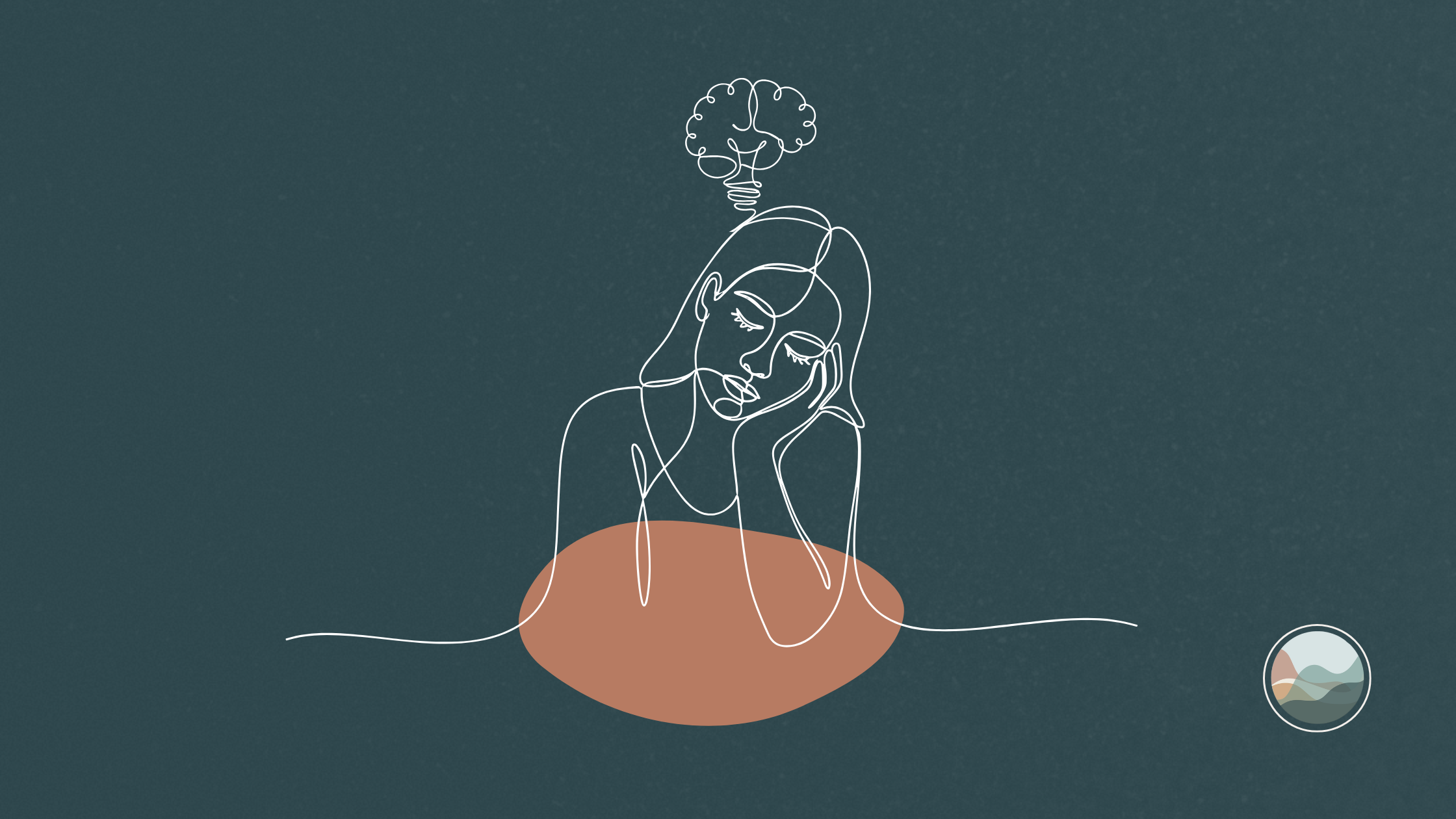
There are people who know they need rest and still cannot seem to let themselves have it.
They are tired. They are stretched thin. They can feel the cost of continuing at the same speed. And yet the moment they try to slow down, something inside them tightens instead of softens.
They sit still and their mind speeds up. They clear their schedule and suddenly feel guilty. They take a day off and spend most of it feeling behind, agitated, or vaguely wrong. What they expected to feel was relief. What they actually feel is anxiety.
That experience is more common than people realize.
A lot of high-achieving people assume rest should come naturally once they “earn” it. They think that if they can just finish enough, produce enough, or get far enough ahead, slowing down will finally feel peaceful.
Usually, that is not how it works.
For many people, rest does not just feel unfamiliar. It feels unsafe. And until that is understood more clearly, even needed rest can start to feel threatening rather than restorative.
Rest can feel threatening when your nervous system is used to motion
One of the hardest things to understand about anxiety is that it does not always attach itself to obviously dangerous things.
Sometimes it attaches itself to stillness.
If your system has gotten used to functioning in a state of urgency, over-responsibility, or constant output, movement can start to feel like safety. Staying busy can feel regulating. Producing can feel stabilizing. Being needed can feel clarifying. Even stress can begin to feel strangely familiar.
Then when that motion stops, your body does not automatically interpret the pause as peace.
Sometimes it interprets the pause as exposure.
Without emails to answer, tasks to complete, people to respond to, or problems to solve, there is suddenly more room to feel what had been getting managed through momentum. Thoughts get louder. Emotions catch up. Vulnerability becomes more noticeable. The very thing you thought would calm you down can make you feel more activated at first.
That does not mean rest is wrong for you.
It often means your system has learned to associate action with control.
Why high-achieving people often struggle to relax
For high-functioning, achievement-oriented people, rest is rarely just about rest.
It is often tangled up with identity.
When someone has built a life around being capable, productive, responsive, disciplined, or high-performing, slowing down can trigger much more than physical discomfort. It can stir up questions like:
Who am I when I am not producing?
What happens if I stop for too long?
What if I fall behind?
What if people need me and I am unavailable?
What if rest makes me soft, unmotivated, or less sharp?
Those questions are not always conscious, but they shape the emotional experience of rest all the time.
A person can know, intellectually, that they are allowed to take a break and still feel emotionally unable to do it.
That is because rest may not simply feel like a pause. It may feel like a loss of usefulness, a loss of structure, a loss of momentum, or even a loss of self.
For some people, slowing down creates direct contact with a kind of emptiness they have been outrunning for a long time.
For others, it brings guilt online immediately.
Not because they are doing something wrong, but because somewhere along the way, they learned that worth is reinforced through effort.
Stillness can make underlying anxiety more visible
Another reason rest can feel unsafe is that stillness often reveals what busyness has been covering.
A lot of people are not just managing schedules. They are managing internal noise.
When life is full, there is less room to notice grief, loneliness, resentment, uncertainty, anger, self-doubt, or fear. A packed day can function like a buffer between a person and whatever feels harder to face.
Then when things quiet down, all of that becomes easier to hear.
This is one reason people sometimes say things like:
“I do better when I stay busy.”
“My mind gets worse when I have too much free time.”
“I was fine all week, but the second I stopped, I crashed.”
“I finally had time to rest and somehow felt more anxious.”
That is not imagined. And it is not laziness or poor self-awareness.
Often, it is what happens when the nervous system no longer has enough distraction to keep distress pushed to the side.
The problem is that this can create a very painful loop. The person feels anxious when they rest, so they avoid rest. Then they become more depleted, more reactive, and more dependent on overfunctioning to feel okay. The less rest they get, the harder rest becomes.
The difference between avoidance and restoration
It is also important to clarify that not all slowing down is actually restorative.
Sometimes what looks like rest is really collapse. Sometimes it is numbing out. Sometimes it is shutting down because the system has run out of energy rather than intentionally recovering.
That distinction matters.
Avoidance usually has a frantic or disconnected quality to it. A person may be technically off the clock but still completely flooded. They may scroll for hours, lie in bed feeling bad, half-watch television while ruminating, or move through a day off without feeling any more restored by the end of it.
Restoration feels different.
Restorative rest does not always feel magical or deeply peaceful right away, but it tends to involve some actual reconnection. There is more presence. More choice. More intentionality. The body softens, even if only a little. The mind becomes less defended. There is some real replenishment happening rather than just temporary escape.
The goal is not to shame avoidance. Avoidance is often a sign that someone is overloaded.
But it does help to name the difference.
Not every pause is nourishing. And not every still moment is the kind of rest your system actually needs.
Guilt is often part of the picture
For many people, anxiety around rest is intensified by guilt.
They rest, but do not feel allowed to enjoy it.
They slow down, but think about what they should be doing instead.
They take a break, but spend the whole time trying to justify it.
This is especially true for people who grew up in environments where rest was seen as indulgent, laziness was harshly judged, or emotional needs were minimized in favor of performance, caretaking, or responsibility.
If you were taught, explicitly or indirectly, that good people stay productive, useful, alert, and available, rest can start to feel morally loaded.
Not just uncomfortable. Wrong.
That kind of guilt does not go away simply because someone tells you to “listen to your body.”
Sometimes the body is asking for rest while the mind is still organized around fear, duty, and self-surveillance.
That is why learning to rest often requires more than permission. It requires unlearning.
Building tolerance for rest without shame
If rest currently makes you anxious, the answer is usually not forcing yourself into some idealized version of relaxation and then feeling worse when it does not work.
The answer is often building tolerance slowly.
That can look like:
Starting with shorter, more intentional pauses rather than trying to leap into total stillness
Choosing forms of rest that feel grounding, not just passive
Reducing stimulation in ways that do not feel punishing
Practicing presence without demanding immediate calm
Letting rest be imperfect rather than treating it like another performance metric
For some people, this means taking a ten-minute walk without a podcast before attempting an entire unplugged afternoon.
For others, it means noticing the guilt without obeying it.
For others, it means learning that rest does not have to be earned through exhaustion first.
One of the most useful shifts is moving from the question, “How do I make rest feel easy?” to, “How do I help my system feel safer with less motion?”
That is a very different goal.
You are not trying to become someone who never feels activated when they slow down. You are trying to become someone who can stay with that activation long enough for something softer to eventually emerge.
What it can look like to practice restorative rest
Restorative rest is often quieter and less dramatic than people expect.
It may look like putting your phone in another room for thirty minutes.
It may look like going home after work instead of automatically adding one more task.
It may look like reading without multitasking.
It may look like doing one thing slowly.
It may look like taking a day off and resisting the urge to fill every open hour.
It may look like letting your body be tired without arguing with it.
It can also look like therapy.
Because for many people, the issue is not simply time management. It is the emotional meaning attached to slowing down. It is the fear that comes up when there is less to hide behind. It is the long-standing belief that safety lives in effort and that stillness leaves too much exposed.
That kind of pattern usually needs more than productivity advice.
It needs understanding.
A final word
If rest feels unsafe for you, that does not mean you are bad at resting.
It may mean your system has learned to trust effort more than ease. It may mean anxiety has attached itself to stillness. It may mean productivity has been doing more emotional work for you than you realized.
None of that means you are failing.
It means there is something important to understand about how you have learned to survive.
The goal is not to become passive. It is not to stop caring, stop striving, or stop functioning well.
The goal is to build a relationship with rest that does not feel like collapse, guilt, or threat.
Because rest is not the opposite of discipline.
It is not the opposite of ambition.
And it is not the opposite of strength.
Sometimes it is the very thing that makes sustainable strength possible.
If slowing down brings up more anxiety than relief, that may be something worth understanding more deeply, not pushing through alone.
